
Everyone needs a bestie...
On collegiality, friends at work, and filling your cup

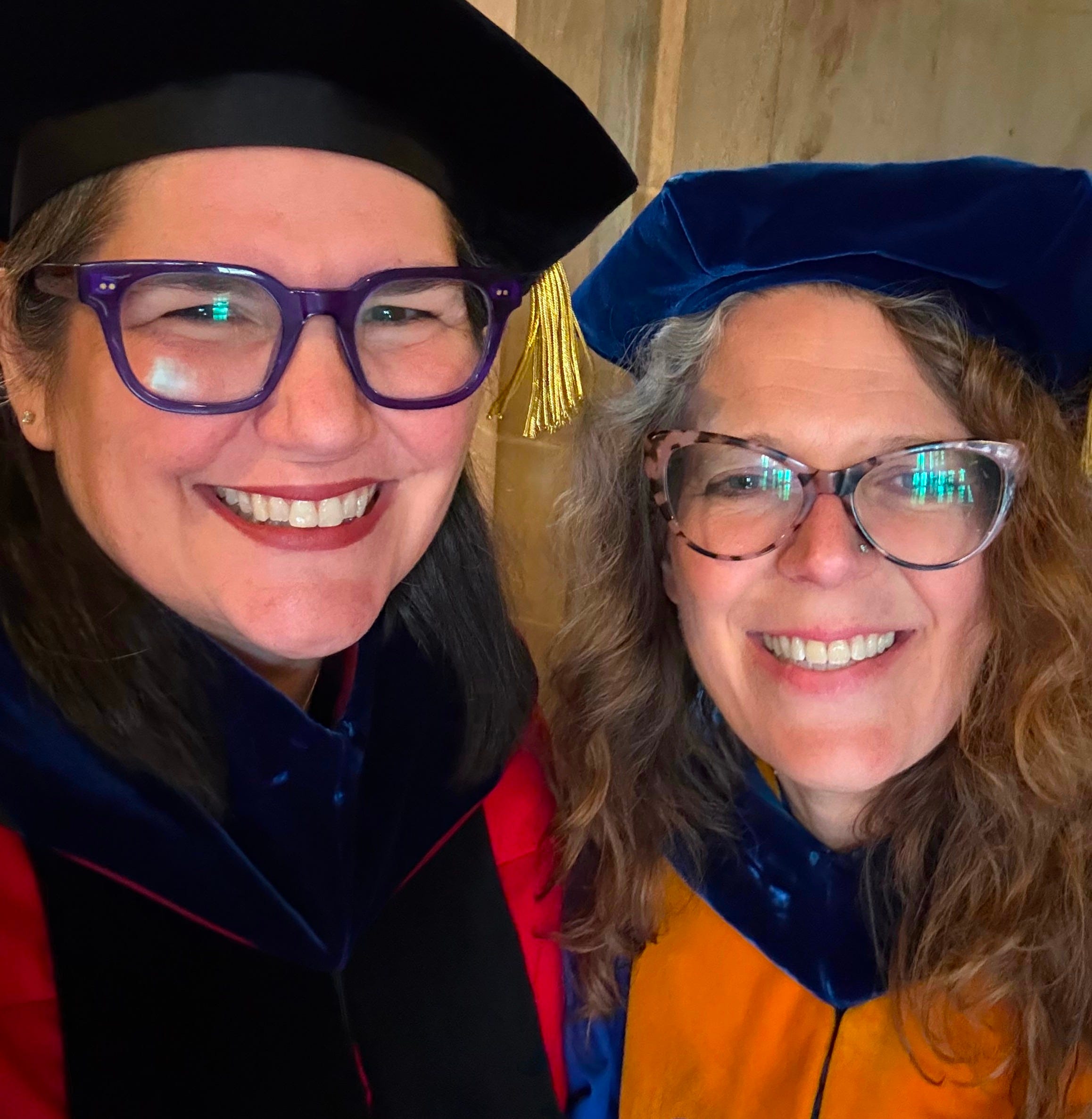
Everyone has the right to a BFFAW, or a “Best friend forever at work” — a term coined by my former colleague Dawn Riordan and I when we both worked at the headquarters of Galileo Learning.
There is a loneliness epidemic in ministry. The World Health Organization notes there’s a loneliness epidemic globally, but there’s a unique dimension to ministry (and other helping traditions like psychotherapy, medicine, holding political office) such that the ethics around professional boundaries call for constant self-vigilance.
Because I’ve been fortunate to live most of my ministry called to secular and faith-based charitable work that is not in a congregation, I haven’t had quite the same constraints — but I’m around enough people who have them, and I watch the pain of their isolation at work. And I also have been fortunate that some of my best friendships formed early in my training for ministry have stood the test of over two decades.
My first management coach, a guy from Insperity named David Nettles that worked with us at Alliance for Climate Education (now Good Power) taught me an important lesson: Everyone needs to make friends with the parts of their job they don’t like. And that’s true — sometimes you just have to put your adulting pants on and power through the soul-sucking worst part of your job. But Marcus Buckingham argues in his book Love + Work, that it’s important to find the ‘red threads’ that run through your work. Because if you don’t have love at work, you will be miserable. This doesn’t mean that you have to love it all, all the time. It can be your purpose or sense of calling, or a skill you do really well. For me one of my ‘red threads’ at work is a well-planned calendar, updating my weekly review checklist, and doing a quarterly review of what’s coming up on my schedule in the next year or two (yes, year or two).
But without any hesitation I can say that my best loves at work have been the people I’ve worked with.

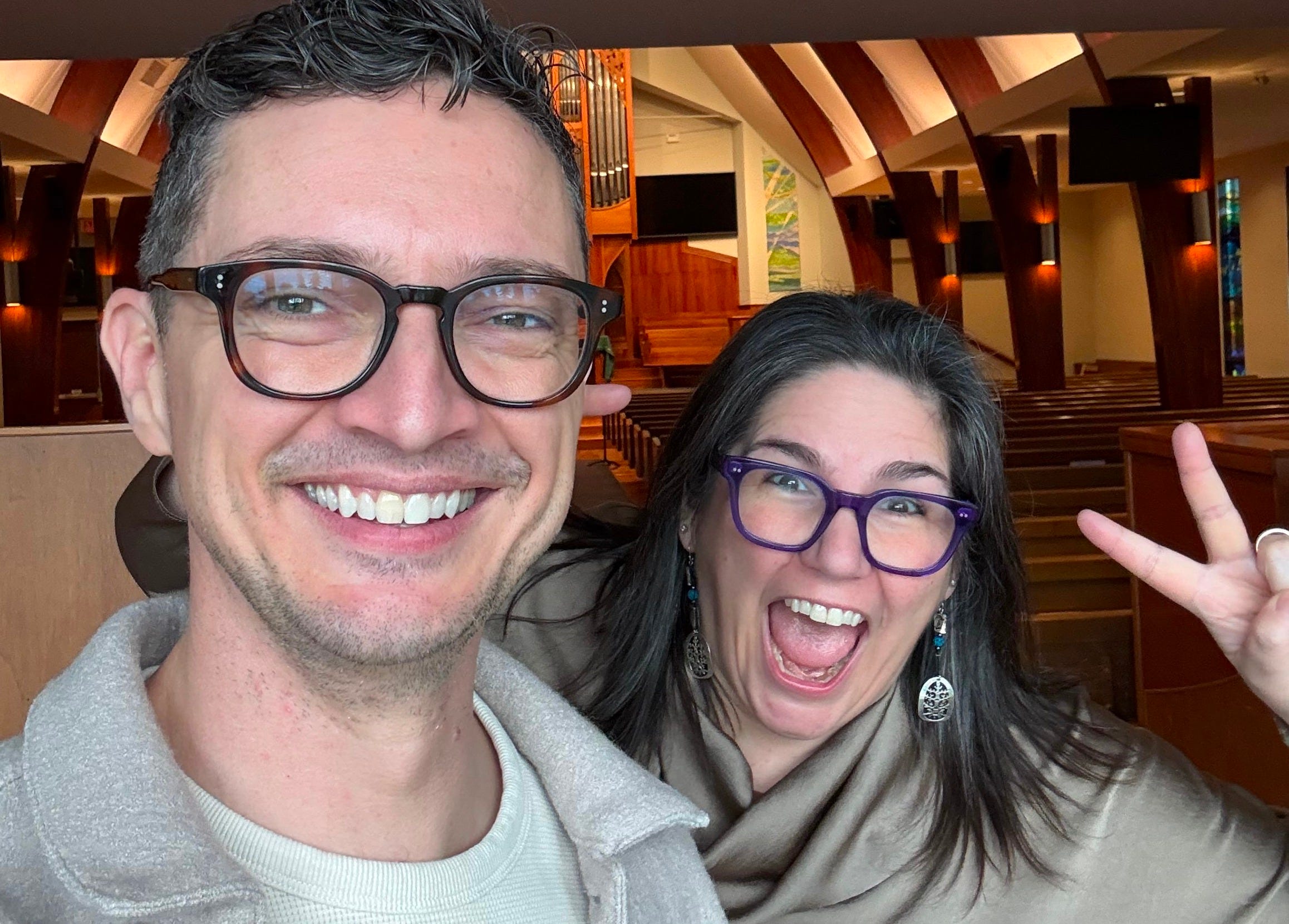
There’s a woman named Marie McDonald, I’m sure I’ve written about her partnership in my work before. While Dawn and I were BFF’sAW, Marie was a close second. Dawn and I were based in the Bay Area, and Marie was a senior leader at Galileo for Southern California. We met once in my first weeks at the company, and every time she was in Oakland, we’d walk over to Blue Bottle coffee to get a latte and connect. We never really worked together directly, being in different parts of the organization, but the friendship stuck. Now Marie runs Bloom Leadership with our other friend Maggie Roach-Black (another Galileo alum), and has her own consultancy and podcast.
While I was moderator, I wanted to combine the innovation skills that were so inherent in everything we did at Galileo with the idea of human flourishing and also future thinking. The United Church supported me in contracting Maggie and Marie to help me create the framework for what became the Flourishing Workshop. In a session working on building out the workshop, Marie had been telling us hilarious stories about someone in her life who put the emhPHASIS on the wrong sylLAble in the word sourdough: SourDOUGH. And also about a yoga teacher named Tatiana and the way she would teach her yoga classes with the authority of a cold-war era Soviet instructor. The result was a moment of hilarity I managed to catch on video (shared with Maggie & Marie’s permission):
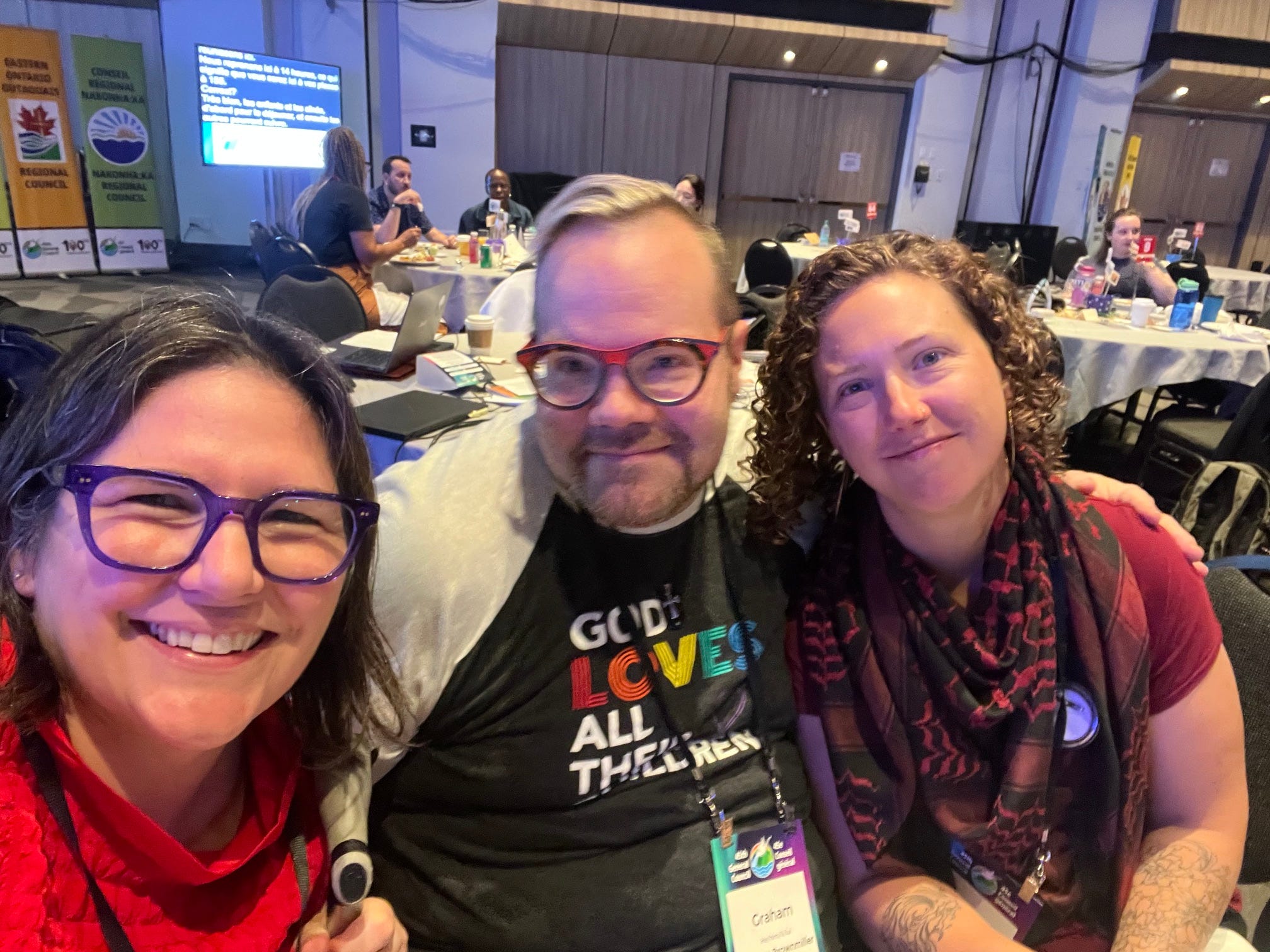
Both my friendship with Graham & Ingrid (seen above) and my friendship with Marie & Maggie have nicknames. In fact many of my group chats have nicknames. Graham & Ingrid: 2 Star Review (if you’ve seen the series “Nobody Wants This” on Netflix, you know). Marie & Maggie: Mysterious Tobacco Schmeeks (inside joke not worth explaining). “The Triplets” arose from me third-wheeling my way into the work bromance ignited between Revs. Mitchell Anderson and Simon LeSieur last summer at the 45th General Council of The United Church of Canada. And my South African theologian sisters at Stellenbosch University and the University of the Western Cape: The Sisterhood of the Traveling Theological Pants. And I can’t forget the Rev. Dr. Michell Voss and the Rev. Dr. Kayko Driedger Hesslein — Profs R Us.
Cultural theorist Sarah Stein Lubrano has a different take in her article “It’s Not a Loneliness Crisis or a Population Crisis...” Stein Lubrano studies political organizing but also (increasingly) social atrophy. The TLDR (too long didn’t read) version of her argument in this article is:
“Allow me to put it all more simply: we don’t have a loneliness crisis, and we don’t have a population crisis. We have a world where, unless you’re fairly rich, being together is rarer, and caring for each other and ourselves is harder. The looping, self-reinforcing effects of these two realities means people are isolated but interestingly not necessarily feeling lonely. It also makes them functionally less able to have children. And once one makes this narrative and cognitive switch much makes sense that didn’t quite before.”1
Essentially, most of us are so caught up in the rat race of produce in end-stage capitalism, we don’t have the same social supports we did in previous eras. However those social supports were largely framed around what she calls the “heterosexual exchange.” There are all kinds of issues in the heteronormativity of that exchange, and Stein Lubrano’s not setting it as a standard — more like a labeling of past dynamics that are changing and having significant impacts on our well-being:
“But more than this, both the “loneliness crisis” and the “population crisis” are really referring to a world where people are less connected and less interdependent and spend more time alone. This is a problem for a lot of reasons, but a big one is that when people are alone, they care for themselves less well. People who live alone are less likely to exercise, less likely to access medical care when they need it, less likely eat in healthy ways, and more. This makes them less productive, which is a big part of why governments care.”
You can read more about the broad strokes in her article. That’s what is happening culturally in Western countries. But that isolation and time alone is also happening within the church, and especially with paid accountable ministers, although likely for many more people who are still working age (given the data that Stein Lubrano highlights).
If we need social supports to do better reproductive labour of (not just having and raising babies, but) taking care of ourselves more broadly, that isolation is a real risk, especially in caring professions where self-care is a well documented necessity for resisting intrinsic risk factors for burn out.
I saw it in (Re)Generate where the collegiality formed between the Blazing Walnuts had outsized impact compared to our intentions in planning. Indeed, we even have a new tradition of documenting Walnut encounters… anytime we are together (where two or three are gathered), people are living into my Grandmother’s favourite saying: if there’s no picture it didn’t happen.
The church talks a lot about community. It’s arguably our whole thing. And yet the people most responsible for holding and tending that community are often its most isolated members — not because they’re unfriendly or introverted, but because the ethics of pastoral care require a kind of relational asymmetry that can quietly hollow you out over time. You pour out; you can’t always receive back, at least not from the same people.
So here’s what I want to ask you, if you’re a minister or in another helping profession with similar boundary demands: What brings you joy at work? Not what you’re good at, not what your call is — though those matter — but what actually lights something up in you? And who do you get to feel that with?
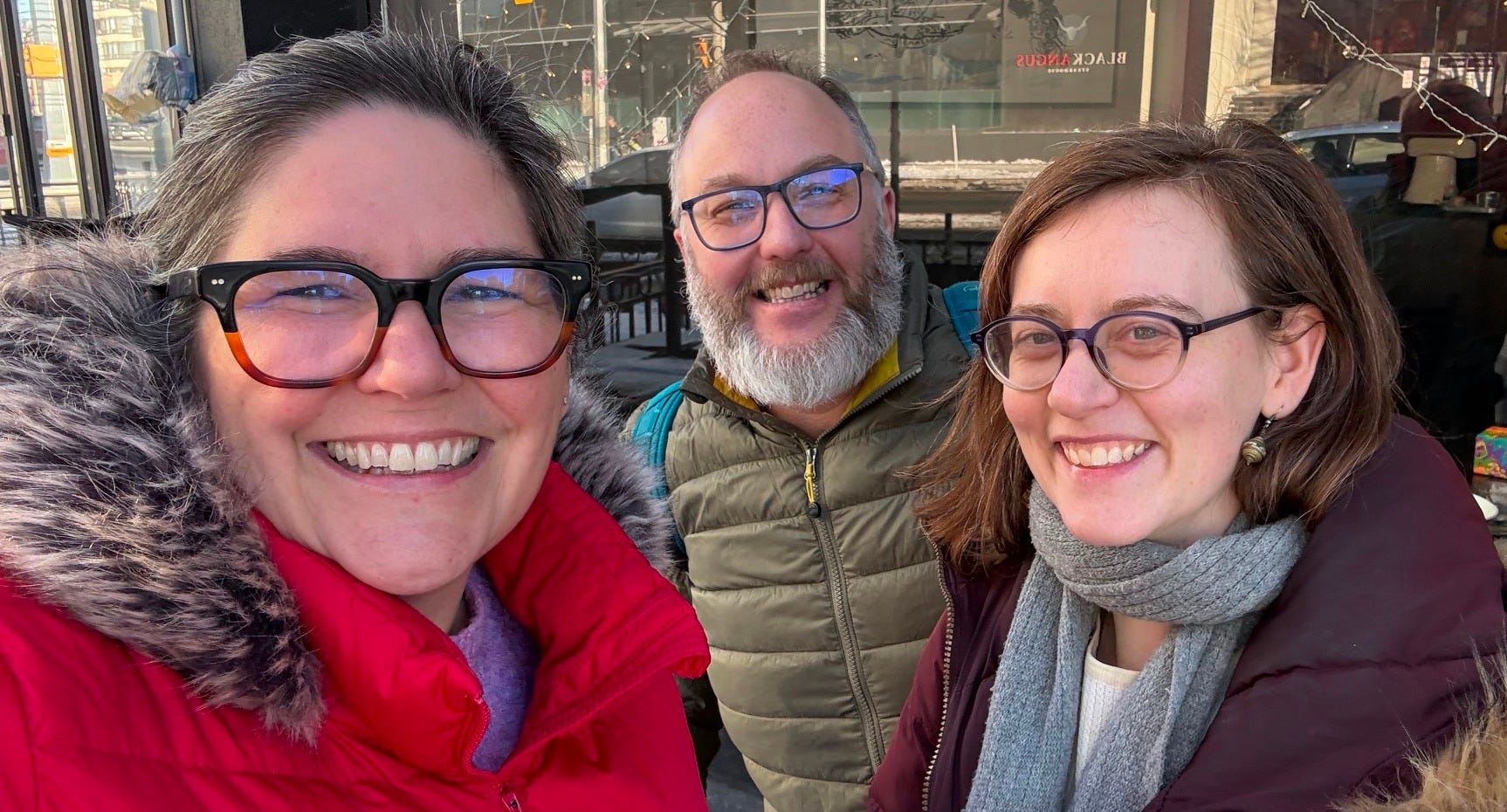
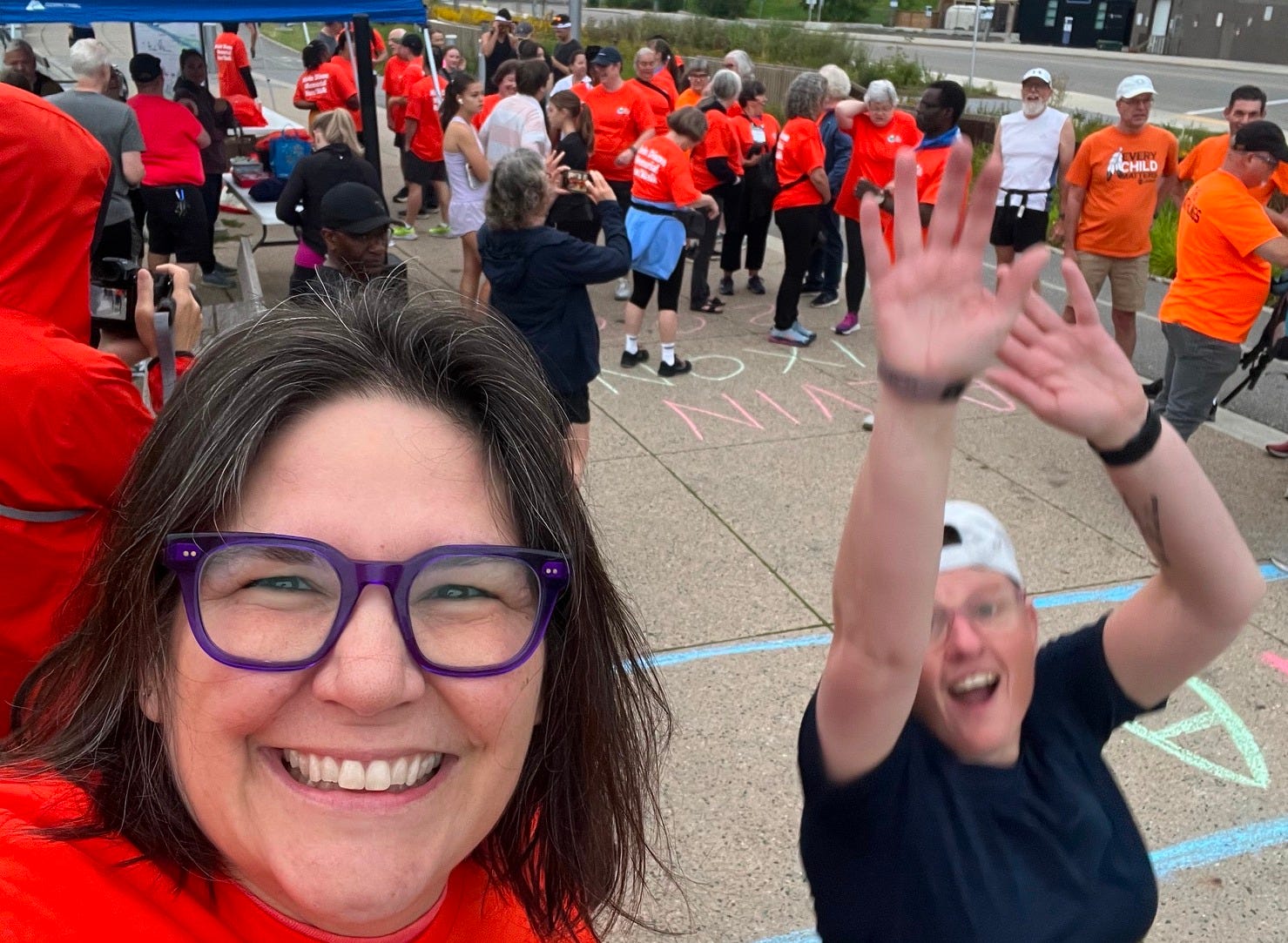
It could be as simple as finding your work twin, as I did with Lisa Folkins — a youth minister in Atlantic Canada (we’re literally the same age with the same birthday). Lisa photobombs my pictures wherever she can, and also taught me to nod my head and raise an eyebrow and say ‘Sup?’ like a middle school boy). Light touches that bring joy to your day. Or it could be as old and deep as the moments of intimacy and sharing with Ingrid and Graham where we plan our retirement compound together (sorry Profs R Us… I’ve got two irons in the fire on that one).
Because the friendship I have with Graham and Ingrid, with Marie and Maggie, with the Triplets and the Sisterhood of the Traveling Theological Pants — these aren’t luxuries I’ve managed to fit in around the real work. They are part of what makes the real work possible. They’re where I get to be a whole person, not just a role. And Marcus Buckingham is right that love at work matters — but I’d go further and say that love with the people you work alongside might be the most underrated spiritual practice in ministry.
If you don’t have that yet, I’m not here to add one more item to your already impossible list. But I do want to gently suggest that this isn’t optional maintenance — it’s load-bearing. Start small: one colleague you actually like, one recurring moment of connection that isn’t a committee meeting. Give it a nickname if that helps. The Blazing Walnuts didn’t plan to become what they became. They just showed up in the same room, repeatedly, with intention — and something took root.
The loneliness epidemic is real, and the church is not exempt from it. But neither is the antidote beyond us. We invented potlucks, after all. We can figure this out.

Thanks Carmen. I’ve been benefitting from your posts - shared one about 2 way communication with the board where I’m doing some interim work. Maybe you’ll write sometime about us retired folk. Lots of issues there. Living on a pension. The retired health care plan. What role might the church have. Us white folk have a different view of elders. I believe we feel and experience many things some os us want church connection. Some of us don’t. Anyway your thoughts would be helpful i think